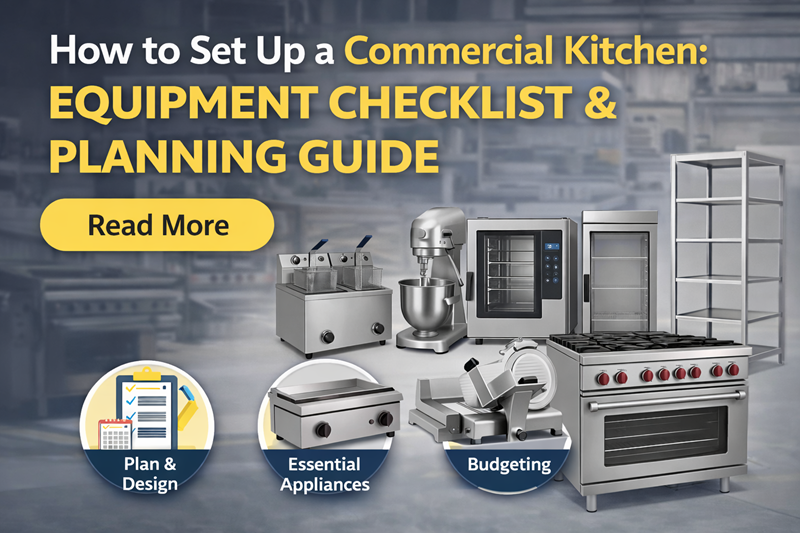
Setting up a commercial kitchen requires careful planning. This step-by-step guide covers equipment selection, layout planning, budgeting, and compliance for restaurants and cloud kitchens.
Introduction: Turning a Kitchen Vision into a Profitable Reality
Starting a restaurant, café, hotel kitchen, or cloud kitchen is exciting but setting up the commercial kitchen can quickly become overwhelming. From choosing the right equipment to planning the layout, managing budgets, and ensuring compliance, every decision impacts efficiency, food quality, and long-term profitability.
A well-designed commercial kitchen is not just about cooking it’s about workflow, safety, hygiene, speed, and scalability.
At Metoraa, we help restaurants, hotels, caterers, and cloud kitchens source reliable, high-quality kitchen equipment with transparent pricing and trusted suppliers. In this guide, we’ll walk you step by step through how to set up a commercial kitchen, including an essential equipment checklist, layout planning tips, budgeting strategies, and compliance requirements.
Why Proper Commercial Kitchen Planning Matters
Many food businesses fail not because of poor food quality but because of inefficient operations, high running costs, and compliance issues.
A well-planned kitchen helps you:
- Increase service speed
- Reduce food waste
- Maintain hygiene and safety standards
- Optimize staff productivity
- Control operating costs
Step 1: Define Your Kitchen Type & Menu
Before buying equipment, clarify what kind of kitchen you’re building.
Common Commercial Kitchen Types:
- Restaurant kitchens
- Cloud kitchens / ghost kitchens
- Hotel kitchens
- Bakery & confectionery kitchens
- Catering kitchens
Your menu determines everything from cooking equipment to storage needs.
For example:
- A cloud kitchen may focus on compact, multi-purpose equipment.
- A bakery requires ovens, mixers, and proofing units.
- A restaurant needs cooking ranges, fryers, refrigeration, and dishwashing systems.
Step 2: Commercial Kitchen Equipment Checklist
Below is a category-wise checklist of essential equipment every commercial kitchen needs.
1. Cooking Equipment (Core Operations)
These are the heart of your kitchen.
Essential Items:
- Commercial gas range / induction range
- Deep fryers
- Griddles and tandoors
- Combi ovens / convection ovens
- Steamers
Why It Matters:
Choosing the right cooking equipment improves speed, consistency, and energy efficiency.
2. Food Preparation Equipment
Prep efficiency determines how fast you can serve customers.
Essential Items:
- Vegetable cutters & slicers
- Mixers and grinders
- Dough kneaders
- Food processors
- Work tables
Why It Matters:
Reduces manual labor, saves time, and improves portion consistency.
3. Refrigeration & Storage Equipment
Freshness, hygiene, and food safety depend on proper storage.
Essential Items:
- Commercial refrigerators
- Deep freezers
- Cold storage units
- Ingredient bins & racks
Why It Matters:
Maintains food quality, prevents spoilage, and ensures compliance with food safety norms.
4. Dishwashing & Cleaning Equipment
Clean kitchens build trust and meet hygiene regulations.
Essential Items:
- Commercial dishwashers
- Sink units
- Grease traps
- Waste management bins
Why It Matters:
Maintains hygiene, speeds up operations, and ensures food safety compliance.
5. Safety & Ventilation Equipment
Safety is mandatory not optional.
Essential Items:
- Chimney hoods and exhaust systems
- Fire suppression systems
- Gas leak detectors
- Heat-resistant flooring
Why It Matters:
Prevents fire hazards, improves air quality, and ensures worker safety.
6. Packaging & Dispatch Equipment (For Cloud Kitchens)
If you operate a cloud kitchen or delivery-based model:
Essential Items:
- Packaging machines
- Sealing machines
- Labelling systems
- Storage racks for orders
Step 3: Kitchen Layout Planning for Maximum Efficiency
A good layout reduces movement, saves time, and avoids congestion.
Key Layout Zones:
- Receiving & Storage
- Preparation
- Cooking
- Plating / Packaging
- Cleaning & Waste
Best Practices:
- Follow a one-way workflow (raw → cooked → served)
- Minimize cross-traffic between staff
- Place high-usage equipment within easy reach
- Ensure proper ventilation and drainage
Step 4: Budgeting & Cost Planning
Setting up a commercial kitchen is an investment. The key is strategic budgeting, not cutting corners.
Cost Components:
- Equipment purchase
- Installation and utilities
- Ventilation and fire safety
- Licenses and compliance
- Maintenance and service
Smart Budgeting Tips:
- Prioritize essential equipment first
- Invest in energy-efficient machines
- Avoid overbuying in the initial phase
- Compare suppliers before purchasing
At Metoraa, transparent pricing helps businesses plan budgets accurately without hidden costs.
Step 5: Compliance, Safety & Licenses
Every commercial kitchen must meet legal and safety requirements.
Common Compliance Requirements in India:
- FSSAI license
- Fire safety clearance
- Gas pipeline certification
- Electrical safety
- Waste disposal regulations
Failing to meet compliance can lead to:
- Heavy penalties
- Business shutdowns
- Loss of customer trust
How Metoraa Simplifies Commercial Kitchen Setup
At Metoraa, we understand that setting up a kitchen is more than buying equipment it’s about building a system that works.
Transparent Pricing
No hidden costs. Know exactly what you’re paying for.
Verified Suppliers
We work with trusted manufacturers and sellers.
Wide Equipment Categories
From cooking and refrigeration to safety and packaging everything in one place.
Easy Comparison & Smart Decisions
Compare products by features, pricing, and capacity to choose what fits your kitchen best.
Common Mistakes to Avoid When Setting Up a Commercial Kitchen
Buying cheap, low-quality equipment
Ignoring ventilation and fire safety
Overcrowding the workspace
Not planning for future expansion
Skipping maintenance planning
Avoiding these mistakes can save significant costs and operational headaches.
Frequently Asked Questions (FAQs)
1. What is the most important equipment for a commercial kitchen?
Cooking equipment, refrigeration units, food preparation tools, and safety systems are the foundation of every commercial kitchen.
2. How much does it cost to set up a commercial kitchen in India?
Costs vary depending on kitchen size, type, and equipment. A basic setup can start from a few lakhs and increase based on scale and automation.
3. Is Metoraa suitable for cloud kitchen equipment purchases?
Yes. Metoraa offers specialized equipment for cloud kitchens, including cooking, refrigeration, packaging, and safety systems.
4. How do I choose the right kitchen layout?
Design your layout based on workflow: storage → preparation → cooking → plating → cleaning. This improves efficiency and reduces delays.
5. Why is transparent pricing important when buying kitchen equipment?
Transparent pricing helps you plan budgets accurately, avoid hidden costs, and make confident purchasing decisions.
6. Can I buy all commercial kitchen equipment from Metoraa?
Yes. Metoraa is a B2B marketplace that offers a wide range of commercial kitchen equipment from verified suppliers all in one place.
Conclusion:
Setting up a commercial kitchen is a critical step in your food business journey. With the right planning, equipment, layout, and compliance strategy, you can create a kitchen that is efficient, safe, and profitable.
With Metoraa, you gain access to transparent pricing, trusted suppliers, and everything you need to build a commercial kitchen with confidence.
Whether you’re launching a restaurant, hotel kitchen, or cloud kitchen, Metoraa is your partner in smarter kitchen procurement.